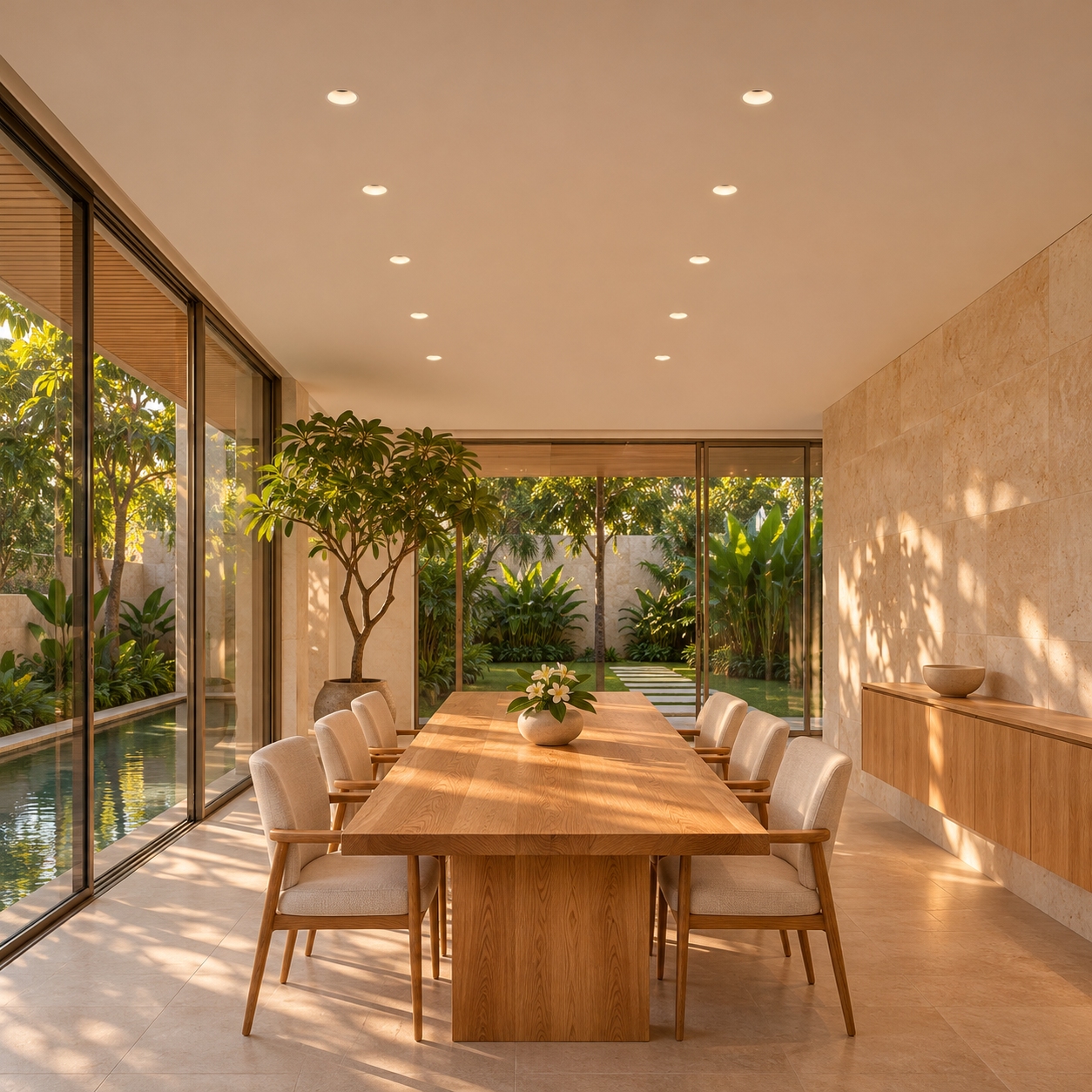
Selecting the right anti-glare LED downlight is about more than choosing a fixture with a deep reflector or a low UGR claim. For commercial lighting projects, the right downlight must balance visual comfort, illumination performance, installation requirements, reliability, and long-term maintenance.
Whether you are sourcing lighting for an office, hotel, retail store, restaurant, or commercial development, understanding how to evaluate anti-glare LED downlights can help prevent costly specification mistakes.
This guide explains how architects, lighting designers, contractors, and B2B buyers can select suitable low-glare downlights based on real project requirements.
Before comparing anti-glare downlight models, define how the space will be used.
Different commercial environments require different lighting characteristics.
| Commercial Application | Main Lighting Requirements | Recommended Considerations |
|---|---|---|
| Offices | Visual comfort, task illumination, uniformity | Low-glare optics, suitable UGR performance, dimming |
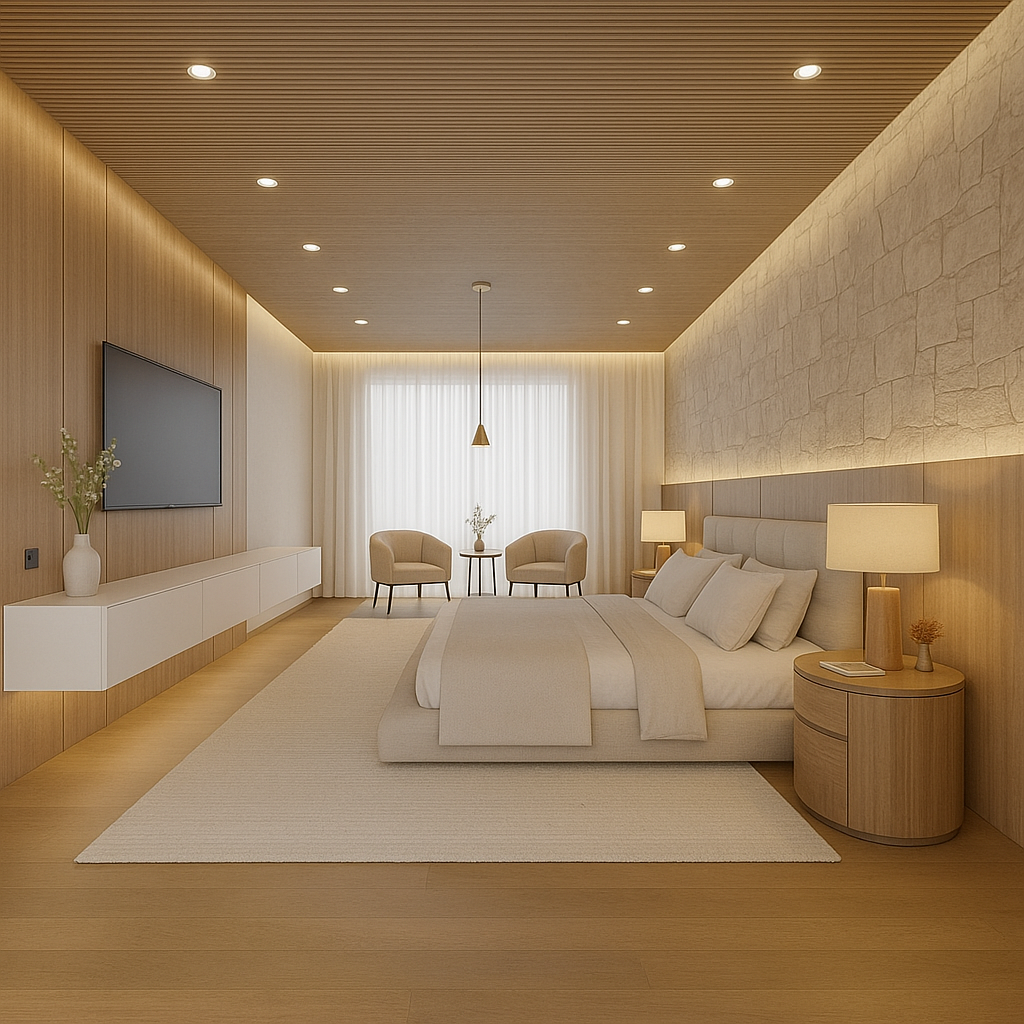
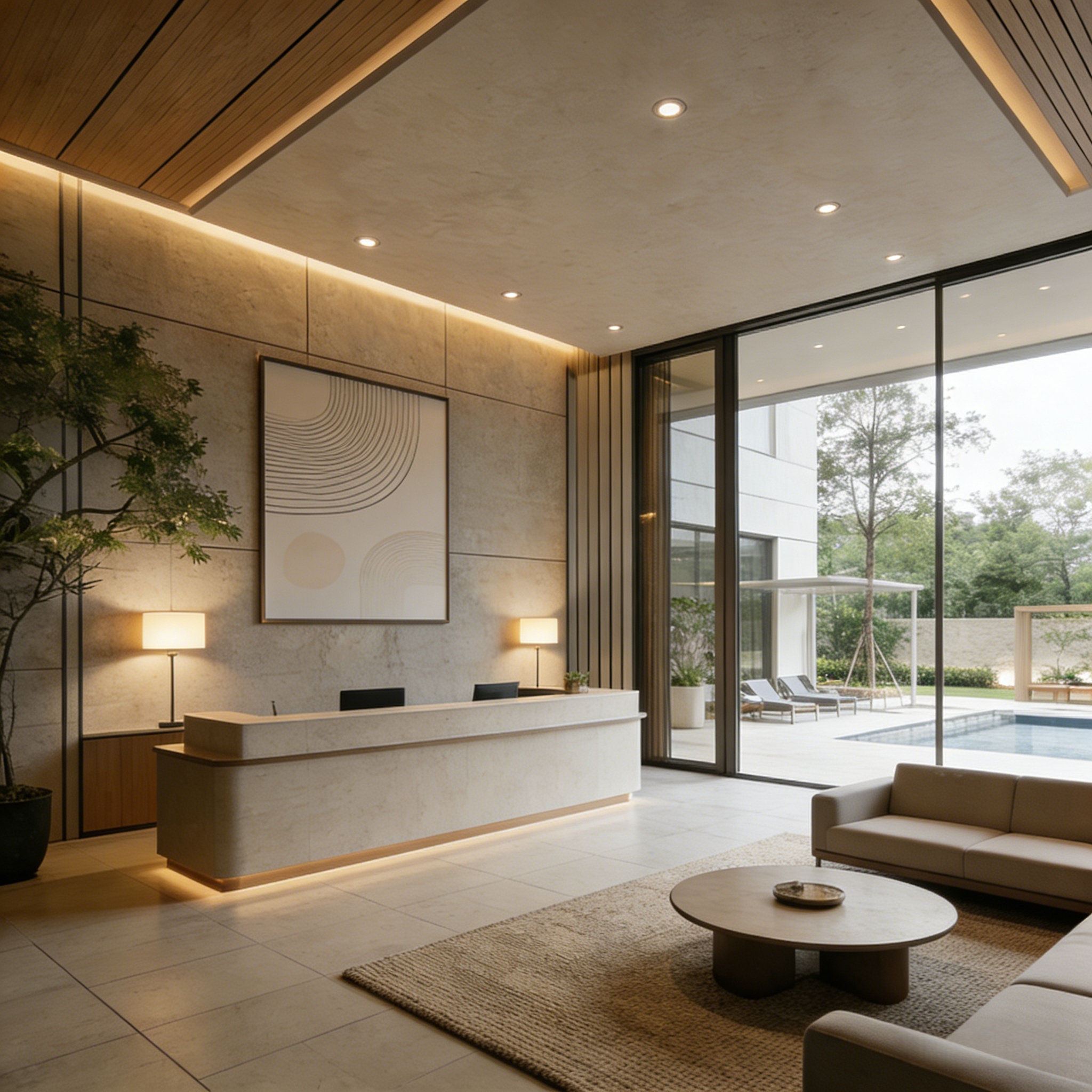
| Hotels | Comfortable atmosphere, discreet ceiling appearance | Deep-recessed designs, warm CCT options |
| Retail stores | Product visibility, colour accuracy, visual impact | High CRI, adjustable optics, controlled beam angles |
| Restaurants | Comfortable ambient and accent lighting | Shielded light sources, dimming, warm lighting |
| Conference rooms | Comfortable viewing and flexible lighting scenes | Glare control, dimming compatibility, screen reflections |
| Showrooms | Accurate product presentation | High CRI, precise optical distribution, adjustable options |
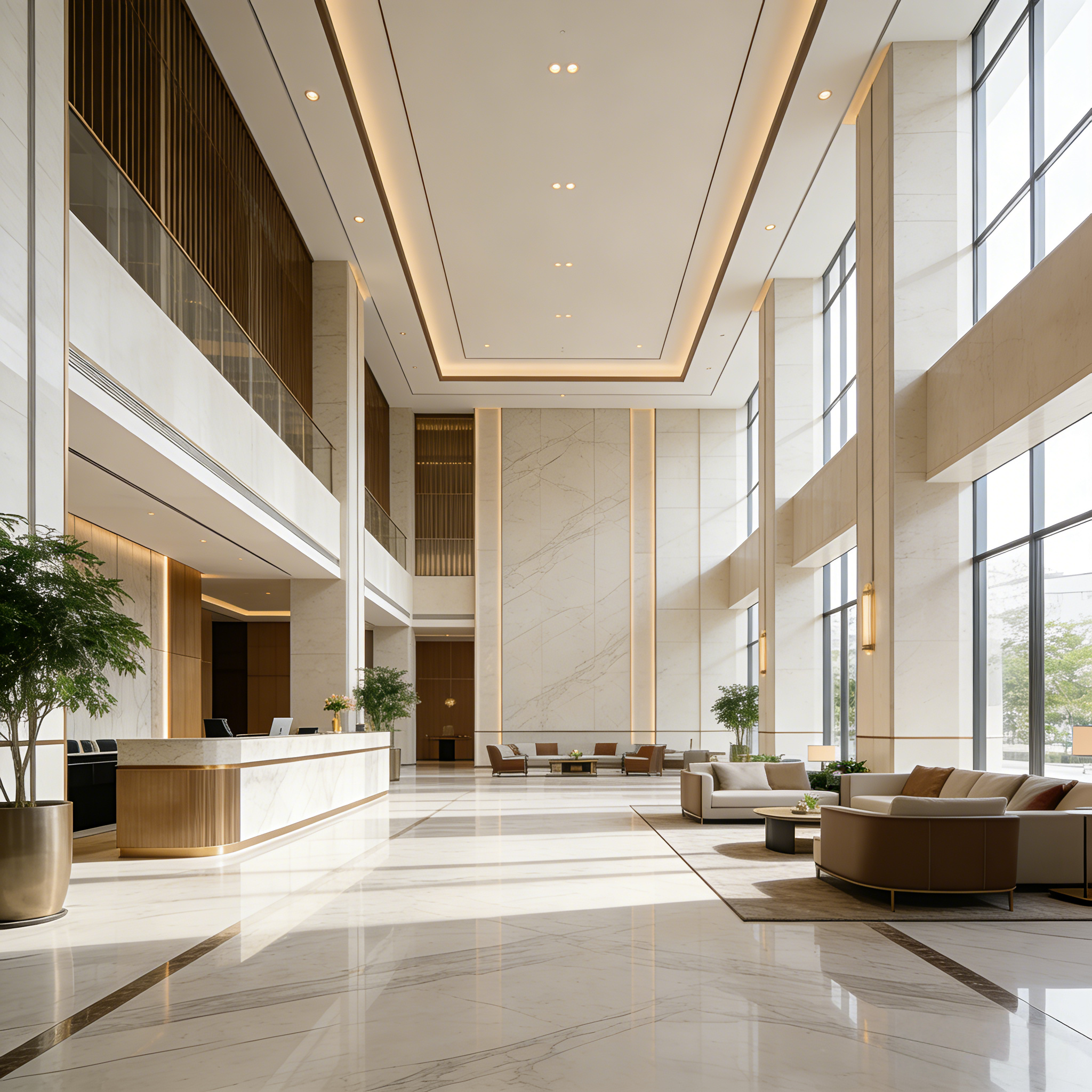
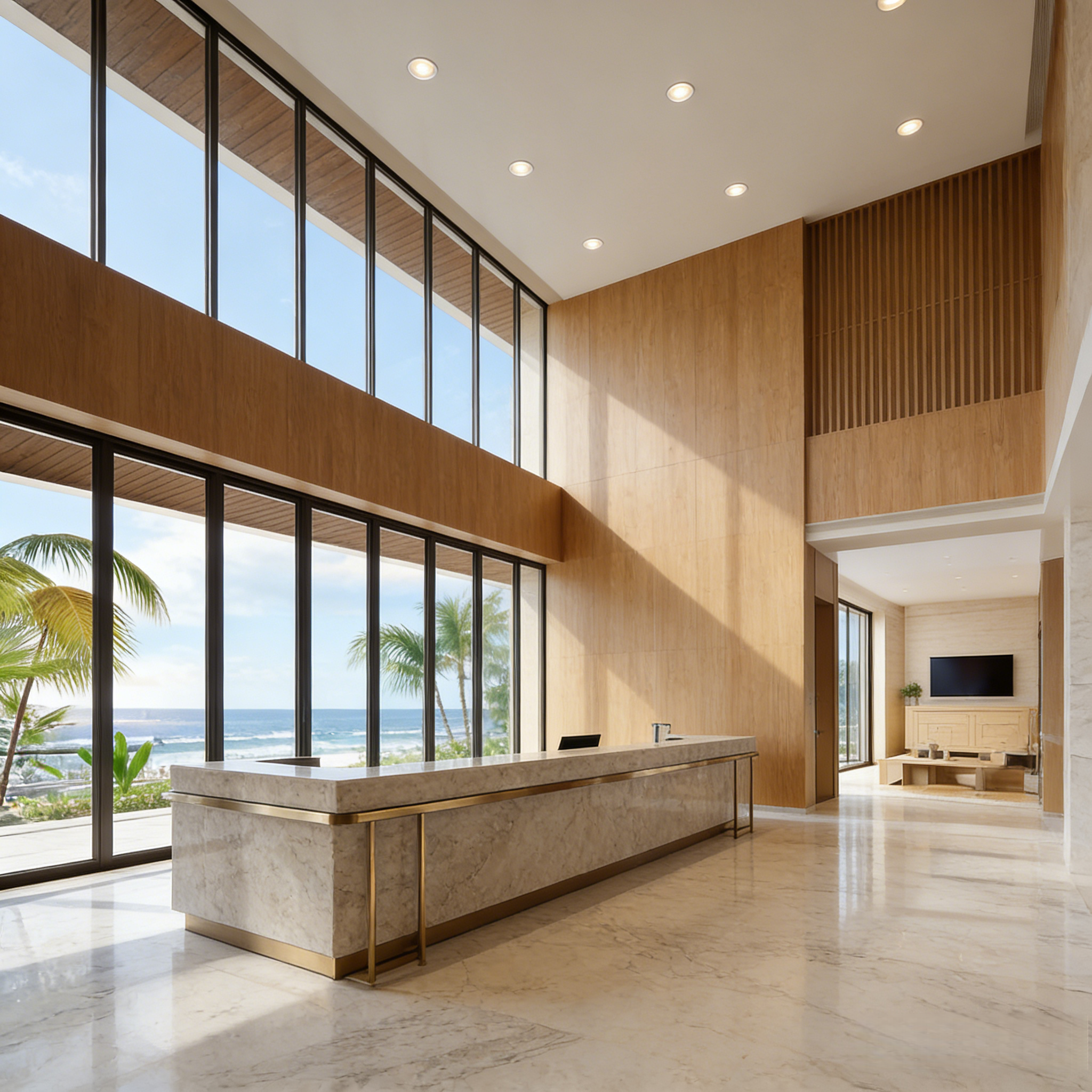
For example, a hotel lobby may prioritize discreet luminaires and warm ambient lighting, while an office requires careful control of glare around workstations and display screens.
The correct product specification should always begin with the application rather than the fixture's appearance.
Not all products marketed as anti-glare downlights provide the same visual comfort.
The effectiveness of an anti-glare LED downlight depends on the complete optical system, including the position of the light source, reflector geometry, aperture dimensions, and light distribution.
A deep-recessed downlight positions the LED source farther inside the luminaire, helping reduce direct visibility from certain viewing angles.
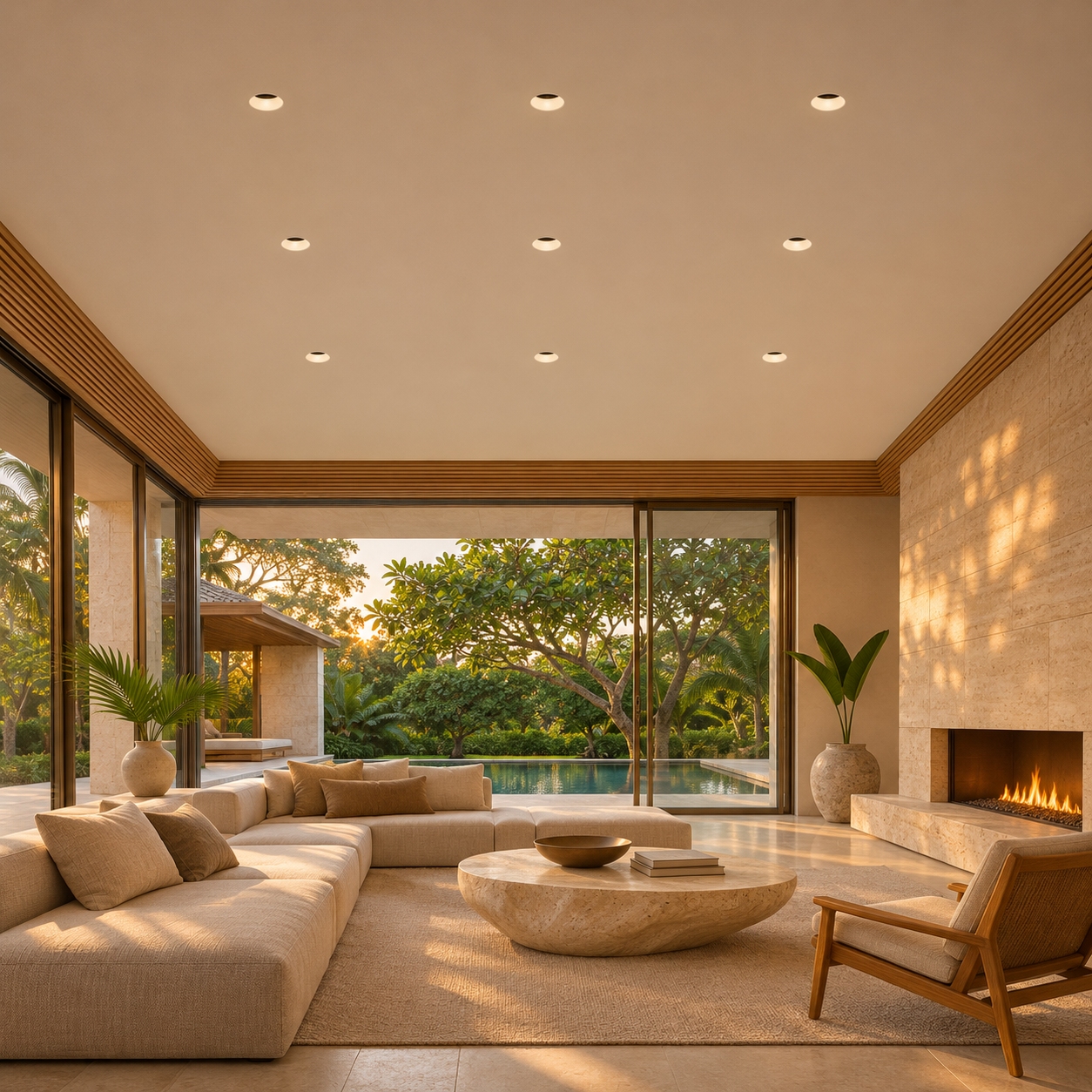
This design is particularly useful in hotels, restaurants, premium retail spaces, and architectural interiors where a discreet ceiling appearance is desirable.
However, greater recess depth does not automatically guarantee better glare control. The actual performance depends on the complete optical design.
Different reflector finishes and optical accessories can influence visual comfort.
When evaluating a product, request optical performance data rather than relying on appearance alone.
UGR, or Unified Glare Rating, is commonly used to evaluate discomfort glare in indoor lighting installations.
For many office applications, a UGR limit below 19 is specified, depending on the applicable standard and project requirements.
However, UGR is not a fixed property of a downlight.
The actual glare result depends on:
A downlight advertised as UGR<19 does not automatically guarantee that every installation will achieve this result.
For projects with strict glare requirements, buyers should request photometric files and verify the proposed lighting layout using suitable calculation software.
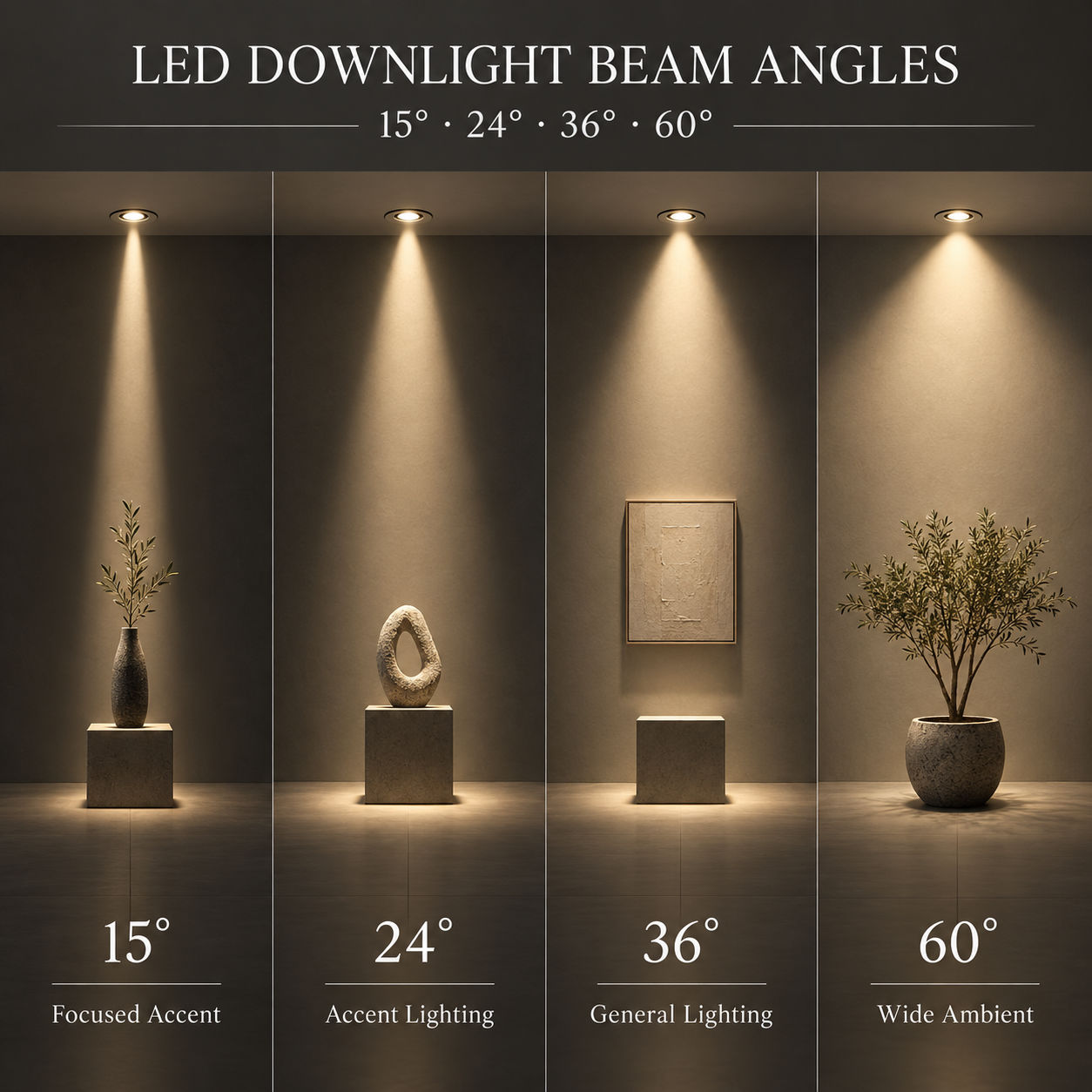
Beam angle influences how light is distributed across a commercial space.
A narrow beam concentrates illumination on a smaller target, while a wider beam distributes light across a larger area.
| Beam Angle | Typical Application | Selection Consideration |
|---|---|---|
| 15°–24° | Product displays, artwork, accent lighting | Precise aiming and controlled brightness |
| 36°–40° | Retail spaces, hotel lobbies, general accent lighting | Balance between coverage and focus |
| 45°–60° | Offices, corridors, general commercial areas | Wider coverage and uniformity |
| Above 60° | Broad ambient illumination | Optical shielding and spacing |
These are general selection ranges rather than fixed design rules.
The final beam angle should be determined by mounting height, fixture spacing, target dimensions, and the required illuminance.
Higher wattage does not necessarily mean better lighting performance.
For commercial projects, compare delivered luminaire lumens, luminous efficacy, beam distribution, and the required illumination level.
For example, a high-output downlight with poor optical shielding may produce uncomfortable brightness even if it provides sufficient illumination.
A better approach is to select the required lumen output based on lighting calculations.
Important factors include:
Avoid selecting downlights based only on wattage.
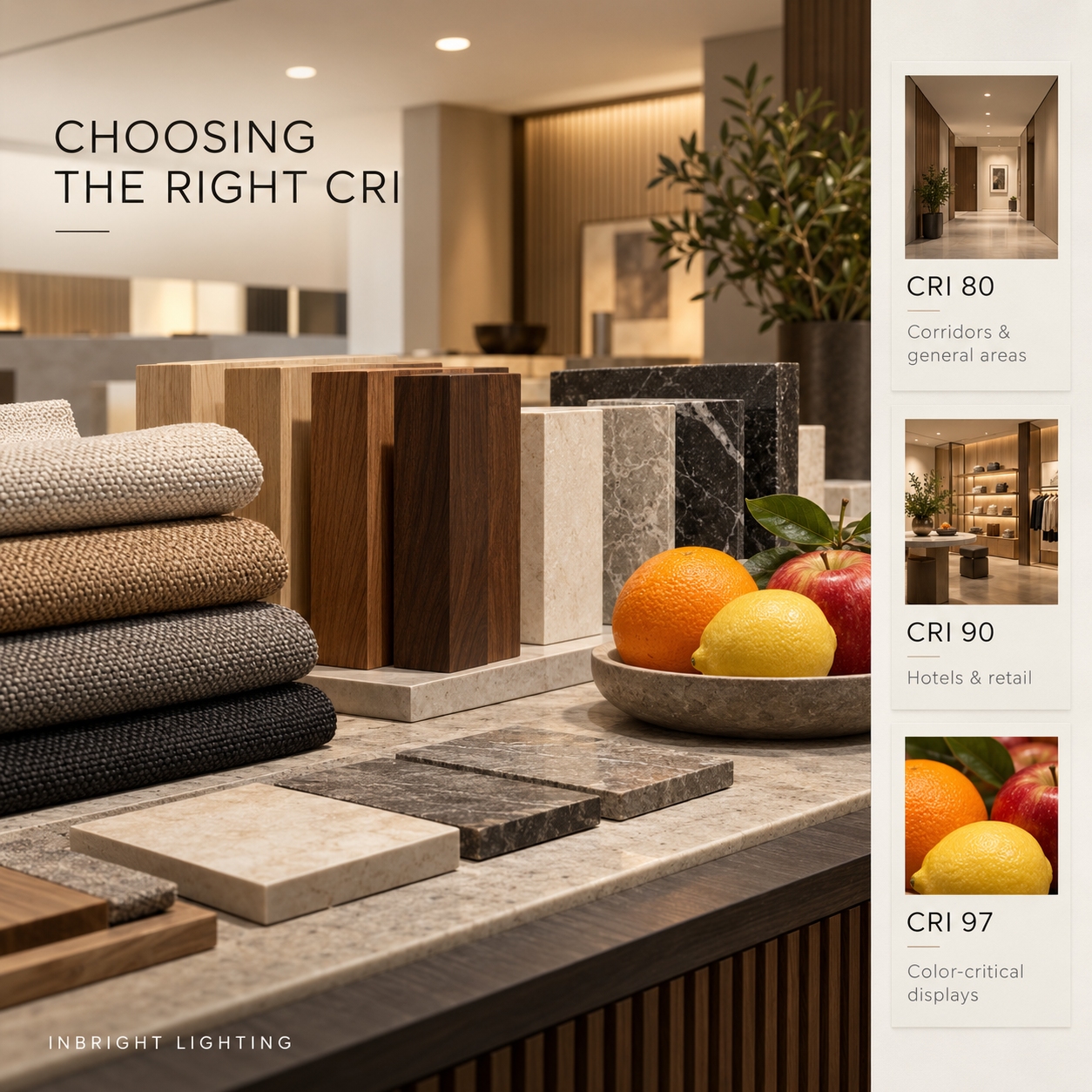
Anti-glare performance is important, but colour quality also affects the overall lighting experience.
CRI indicates how accurately a light source renders colours compared with a reference illuminant.
CRI 80 may be suitable for many general commercial applications, while CRI 90 or higher is often preferred for premium retail, hospitality, and colour-sensitive environments.
Common commercial lighting options include:
The final choice should reflect the interior design, visual tasks, and project specification.
Installation requirements are often overlooked during the initial product selection process.
Before placing an order, verify:
Trimmed downlights generally offer straightforward installation and can help conceal minor cut-out irregularities.
Trimless downlights create a seamless architectural appearance but often require more coordination with ceiling finishing and installation procedures.
Fixed downlights are commonly selected for general illumination.
Adjustable downlights allow the light direction to be changed and are useful for accent lighting, retail displays, and architectural features.
The installation method should be confirmed before selecting a product series.
The LED driver is a critical component affecting the operation and reliability of a commercial downlight.
When evaluating suppliers, request information about:
Common control options include phase-cut dimming, 0–10V, and DALI.
Compatibility must be verified with the actual control system. A downlight described as dimmable is not necessarily compatible with every dimmer or lighting controller.
For large projects, testing a representative sample with the intended control equipment is strongly recommended.
For B2B lighting procurement, product photographs and basic specifications are not sufficient for final approval.
A reliable supplier should be able to provide relevant technical information for the selected configuration.
| Document | Why It Matters |
|---|---|
| Technical datasheet | Confirms electrical, optical, and dimensional specifications |
| IES or LDT file | Supports lighting simulation and photometric evaluation |
| Installation instructions | Confirms mounting and maintenance requirements |
| Driver specifications | Supports electrical and dimming compatibility checks |
| Applicable test reports | Supports verification of declared performance |
| Compliance documentation | Helps assess destination-market requirements |
| Warranty terms | Clarifies product support and replacement conditions |
| Product sample | Allows physical evaluation before bulk purchasing |
For projects requiring strict visual comfort, photometric data and sample testing are especially important.
A sample evaluation can reveal issues that are difficult to identify from a catalogue.
When testing anti-glare LED downlights, check the following:
Observe the luminaire from typical standing and seated positions.
Check whether the LED source is directly visible and whether the reflector produces uncomfortable brightness.
Evaluate beam uniformity, edge definition, unwanted colour separation, and visible hotspots.
Compare samples of the same specified CCT and verify that their appearance meets project expectations.
Test the selected driver with the intended control system, including low-level dimming and switching behaviour.
Inspect the housing, reflector, mounting springs, adjustment mechanism, connectors, and surface finish.
For major commercial projects, a sample mock-up using the actual ceiling height and interior finishes provides more useful information than a desk-based inspection alone.
When purchasing anti-glare LED downlights in bulk, the lowest unit price is not always the most economical option.
Consider the total cost of ownership, including:
A product with a slightly higher initial cost may offer better project value if it reduces installation problems and supports long-term maintenance.
For distributors and OEM buyers, product consistency and repeat-order availability are also important.
Before confirming a commercial lighting order, review the following requirements.
| Category | Items to Confirm |
|---|---|
| Optical performance | Beam angle, delivered lumens, shielding, photometric data |
| Visual comfort | Glare performance under project conditions |
| Colour quality | CCT, CRI, colour consistency |
| Electrical | Wattage, voltage, driver, dimming compatibility |
| Mechanical | Cut-out, housing depth, trim and mounting |
| Environmental | Required IP rating and installation conditions |
| Compliance | Applicable destination-market requirements |
| Quality assurance | Testing documentation and inspection procedures |
| Commercial | MOQ, lead time, packaging, warranty |
| Customization | Available OEM/ODM options |
This checklist helps buyers compare products on a consistent technical and commercial basis.
An anti-glare LED downlight is a luminaire designed to reduce uncomfortable brightness through optical shielding, controlled light distribution, and suitable light-source positioning.
Yes. However, the selected luminaires and installation layout must meet the project's illumination and glare requirements. Product claims alone are not sufficient to verify office lighting performance.
No. UGR requirements depend on the visual tasks, application, relevant standards, and project specification. Different environments may require different glare-control criteria.
Not necessarily. Deep recessing can improve source shielding, but optical quality, luminance, beam distribution, and installation conditions also affect glare performance.
Many models can support dimming when paired with compatible drivers and control systems. Available dimming options should be confirmed for the specific product configuration.
Importers should verify technical specifications, photometric data, applicable compliance documentation, sample quality, driver compatibility, warranty terms, MOQ, and delivery requirements.
Choosing the right anti-glare LED downlight for a commercial project requires a balanced evaluation of optical performance, visual comfort, colour quality, installation compatibility, electrical reliability, and supplier capabilities.
Rather than relying only on product descriptions such as "low glare" or "UGR<19," professional buyers should request suitable technical documentation, review the lighting design, and evaluate physical samples before confirming large orders.
A well-selected downlight can improve visual comfort, support architectural design, and reduce avoidable installation and maintenance issues.
INBRIGHT LIGHTING provides LED downlight solutions for commercial and architectural lighting applications, including deep-trim, fixed, adjustable, and other recessed configurations.
For lighting distributors, contractors, and project buyers, INBRIGHT can assist with product selection and discussions about available optical configurations, installation requirements, driver options, and OEM/ODM customization.
Looking for anti-glare LED downlights for your next commercial lighting project?
Contact INBRIGHT LIGHTING to discuss your required wattage, beam angle, CCT, CRI, installation dimensions, dimming system, project quantity, and customization requirements.
Explore Our LED Downlights | Request Product Specifications | Contact INBRIGHT LIGHTING
Building 2, No.442, Wuyi Road, Jianghai District, Jiangmen City, Guangdong, China.
admin@inbright-lighting.com
0086 - 13424998756
Copyright © Jiangmen Inbright Lighting Co., Ltd All Rights Reserved. 粤ICP备2025393167号 Sitemap XML