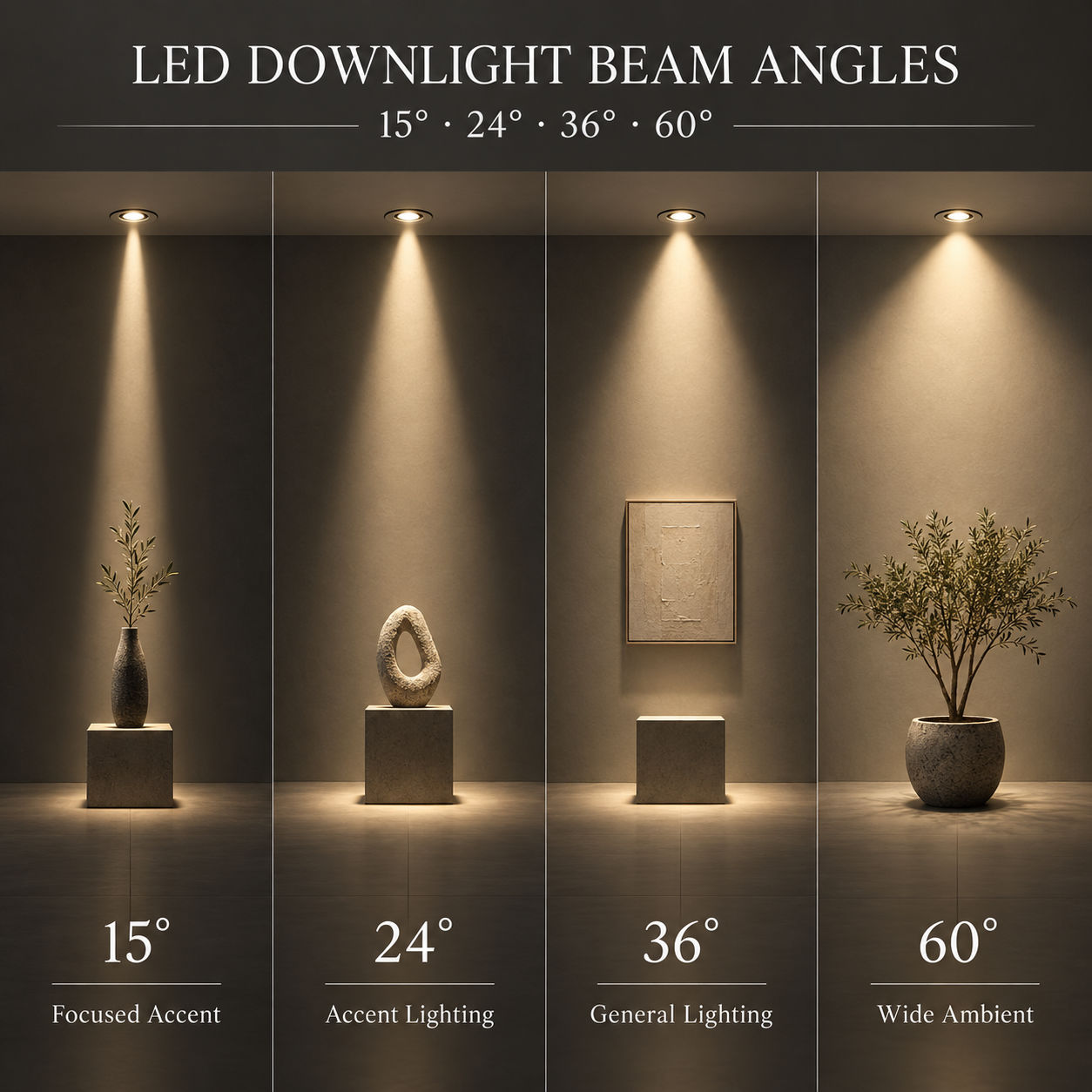
A downlight’s beam angle determines how widely light spreads. Its fixed or adjustable design determines where that light points. To choose between them, first identify what you want to illuminate: the area directly below the fixture, or a specific object or surface elsewhere in the room.
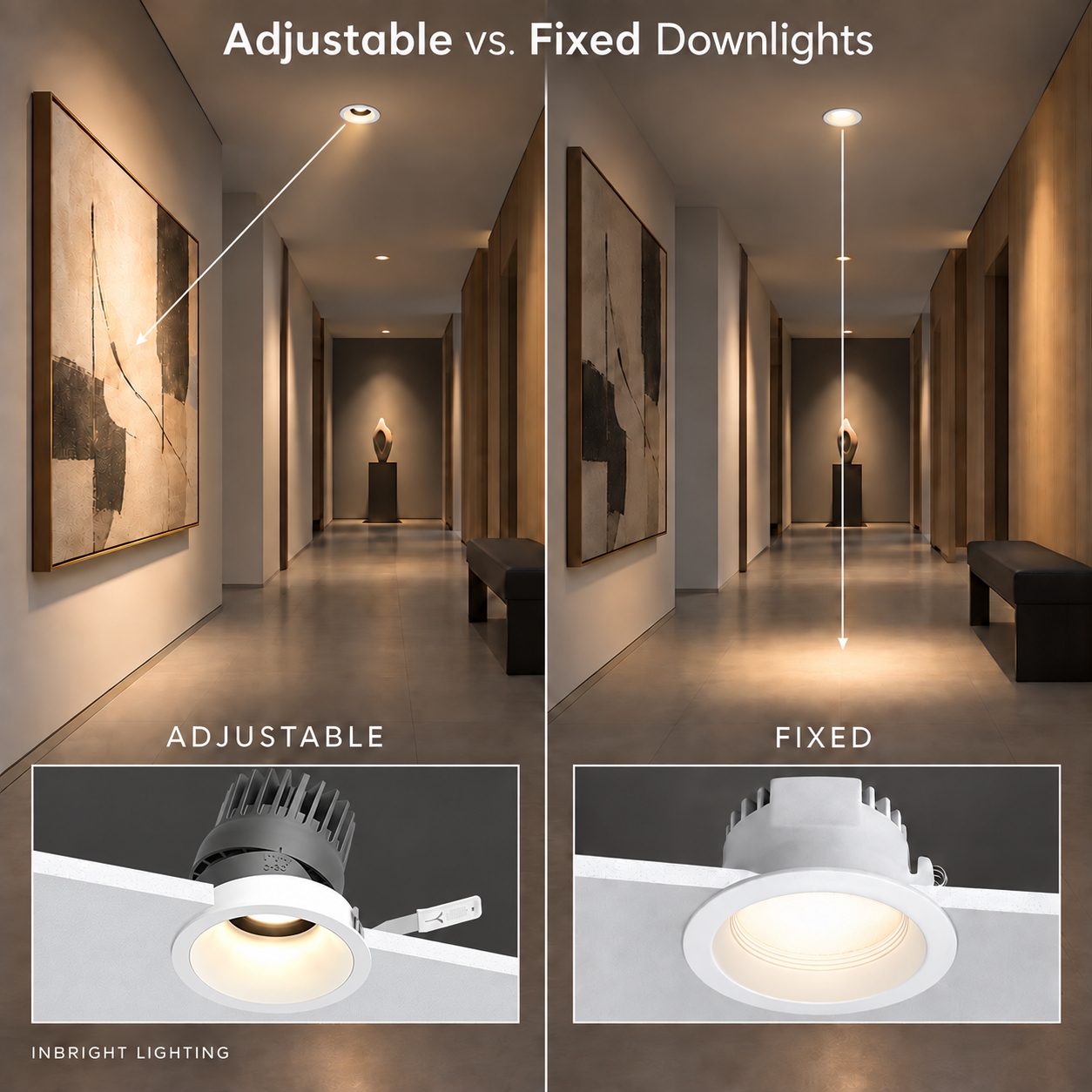
A fixed downlight directs light in a set direction, usually straight down. It is well suited to general lighting when the ceiling layout aligns with the areas that need light.
In corridors, guest rooms and offices, fixed downlights can provide a consistent lighting pattern. They are also useful when the furniture layout and lighting requirements are unlikely to change. The beam angle still needs careful selection: a wider beam covers more area, while a narrower beam creates a more concentrated pool of light.
An adjustable downlight allows the light source to tilt and, on some models, rotate. This helps direct light toward a target that is not directly below the ceiling opening, such as artwork, a display, a reception desk or an architectural detail.
The available adjustment range differs by model. Before choosing a fixture, check whether it can reach the target from the planned ceiling position.
| Lighting task | Recommended starting point | Reason |
|---|---|---|
| General lighting in a corridor or open area | Fixed | The area to be lit is predictable. |
| Highlighting artwork or a display | Adjustable | The beam can be aimed at the subject. |
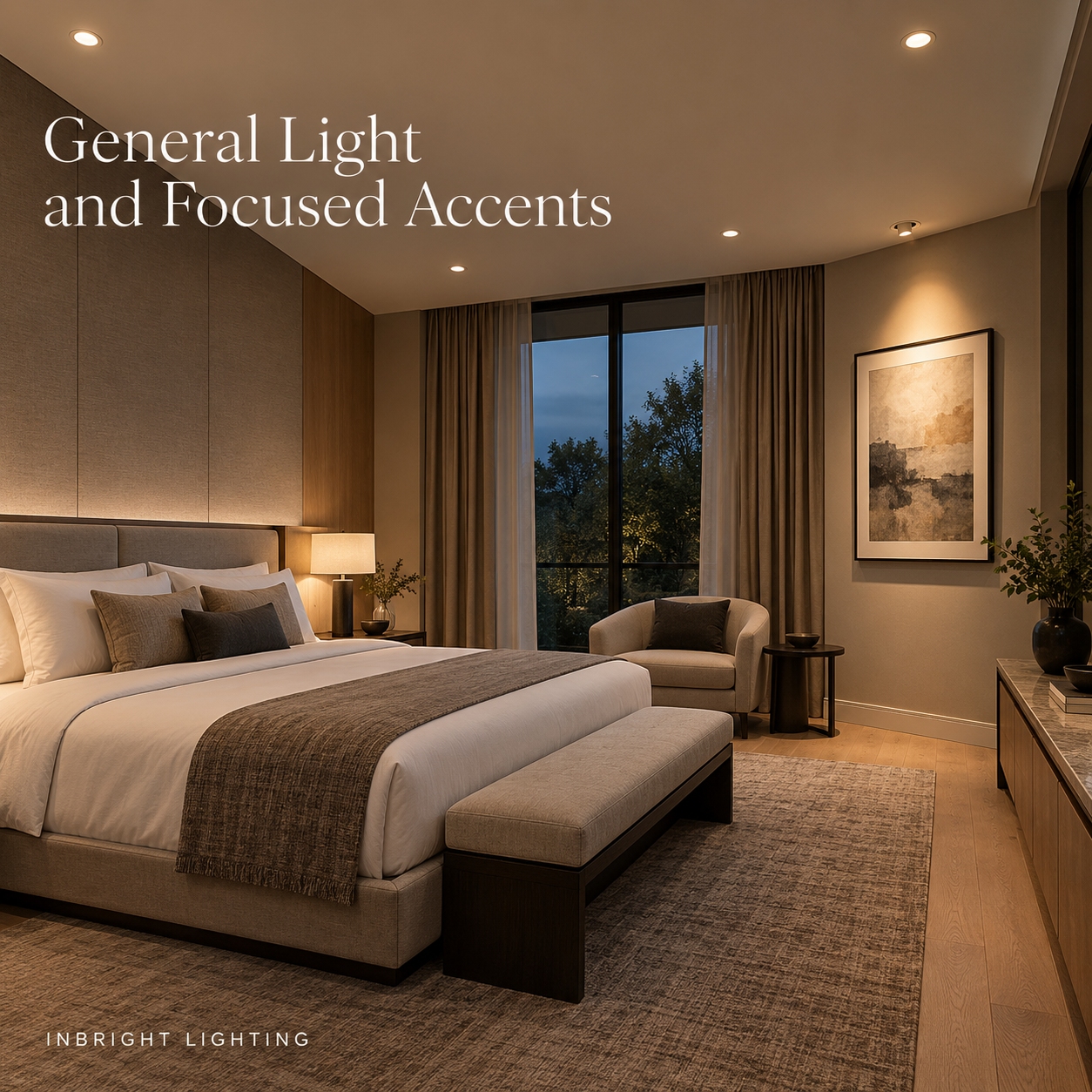
| Guest room with general and accent lighting | Both | Each fixture serves a distinct purpose. |
| Retail display that may change | Adjustable | The aim can be revised as the display changes. |
Start with the lighting target, then decide where the fixture should go. A fixed downlight may be sufficient for a table or walkway directly below it. For a vertical surface or an object farther from the ceiling opening, an adjustable downlight may give you better control.
Beam angle and aiming direction work together. A narrow beam can create a focused accent, while a wider beam covers a larger area. Tilting a wide beam will not necessarily produce a precise highlight.
An adjustable downlight may reveal more of its bright aperture when it is tilted toward someone’s line of sight. Check the proposed aiming direction from the positions people will actually use, such as a hotel bed, sofa or workstation.
A recessed light source and appropriate optical accessories can help, but the result also depends on fixture placement and aiming. Review the lighting effect in the space whenever a sample installation is possible.
Before specifying either type, confirm the ceiling cutout, installation depth, beam angle, light output and dimming requirements. For an adjustable fixture, also check its tilt and rotation range. Use the exact model’s datasheet and photometric information to confirm the layout.
Choose fixed downlights for stable, evenly planned general lighting. Choose adjustable downlights when light must be directed toward a particular feature or when the target may move. Many projects use both: fixed fixtures establish the room’s general lighting, while adjustable fixtures add carefully placed accents.
Building 2, No.442, Wuyi Road, Jianghai District, Jiangmen City, Guangdong, China.
admin@inbright-lighting.com
0086 - 13424998756
Copyright © Jiangmen Inbright Lighting Co., Ltd All Rights Reserved. 粤ICP备2025393167号 Sitemap XML