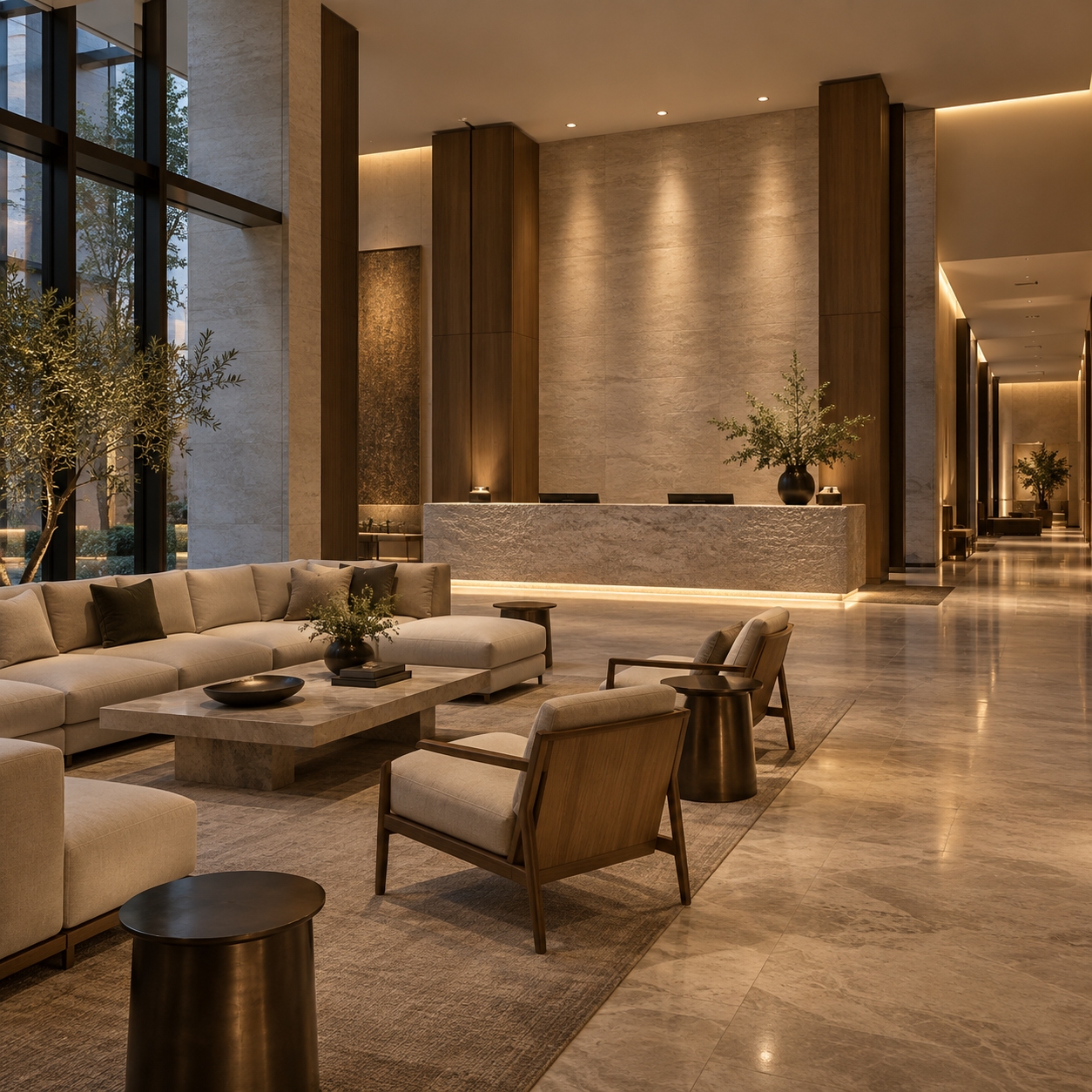
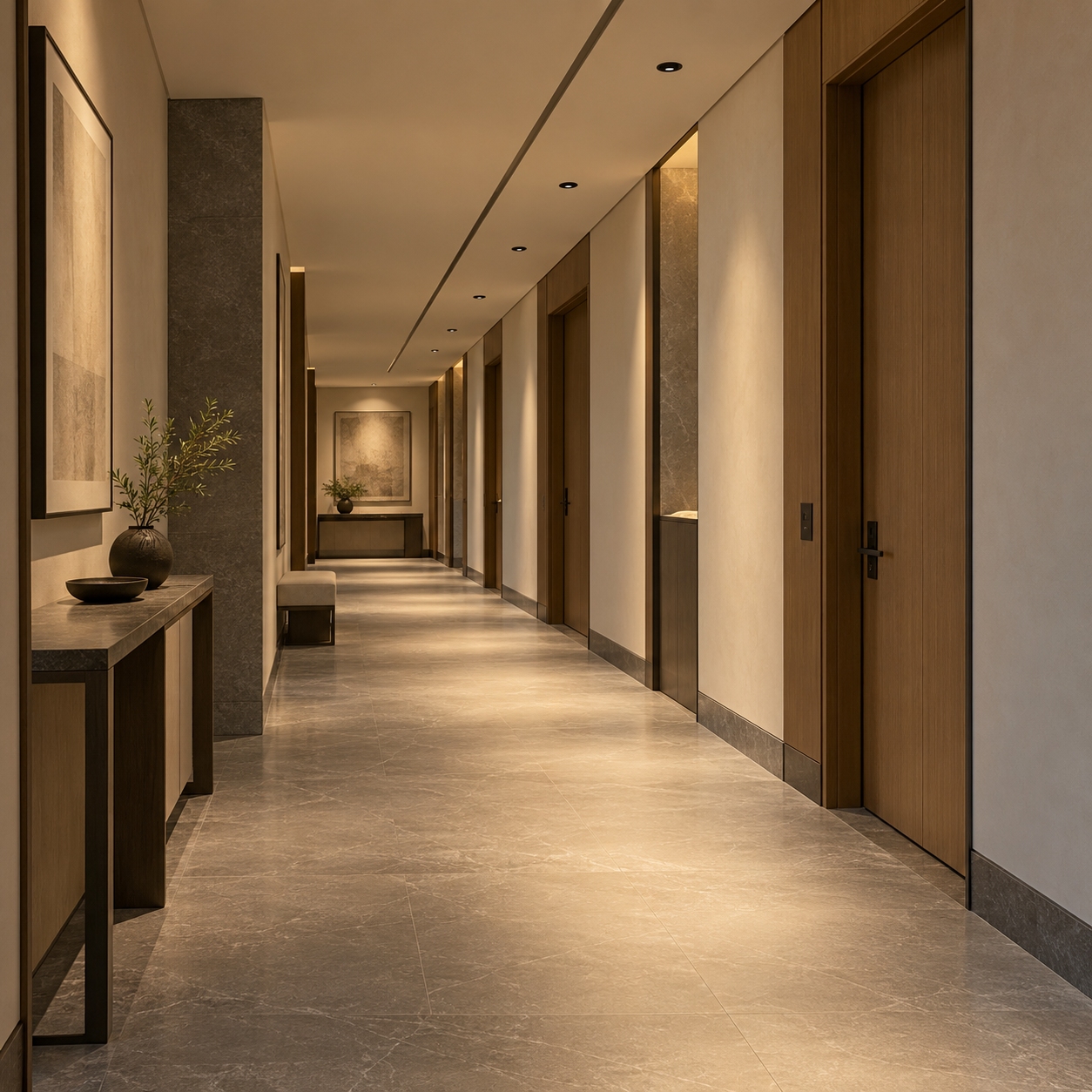
Hotel lighting must support many activities within one property. Guests need a comfortable room for relaxing and reading, clear light at the bathroom mirror, easy navigation through corridors, and a welcoming arrival experience. Restaurants and lounges have their own needs.
That is why selecting hotel downlights by wattage or appearance alone rarely works. The better approach is to define each area’s lighting task, then choose the beam, output, glare control and installation details that serve it. Hospitality lighting is typically planned as a coordinated system of layers across distinct spaces.
Before choosing fixtures, map the activities and viewpoints in each area. In a guest room, consider the view from the bed and seating area, light at a desk or luggage bench, and how guests move toward the bathroom at night. At reception, consider both the guest approaching the counter and the staff member working behind it.
Downlights should contribute to these tasks without becoming the only source of light. Bedside reading lights, mirror lighting, decorative fixtures and indirect lighting may each serve a purpose that ceiling downlights cannot fulfil as effectively. Insufficient light for reading and at bathroom mirrors is a recurring guest-room concern.
| Area | Main lighting goal | Downlight selection focus |
|---|---|---|
| Guest rooms and suites | Comfortable general light with selected accents | Low glare from seated and reclining positions; coordinated dimming |
| Corridors | Clear wayfinding and consistent visibility | Suitable beam spread, orderly spacing and controlled brightness |
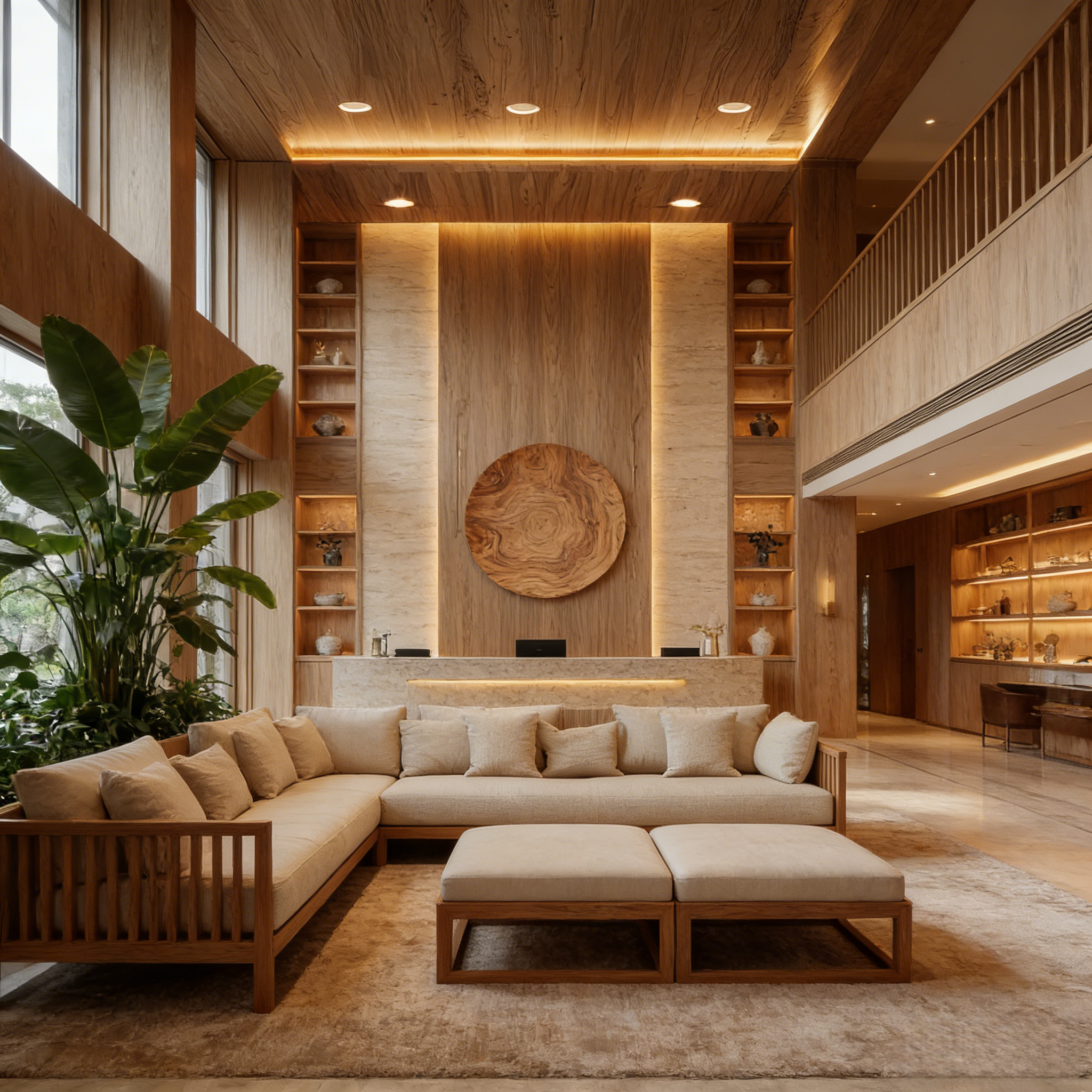
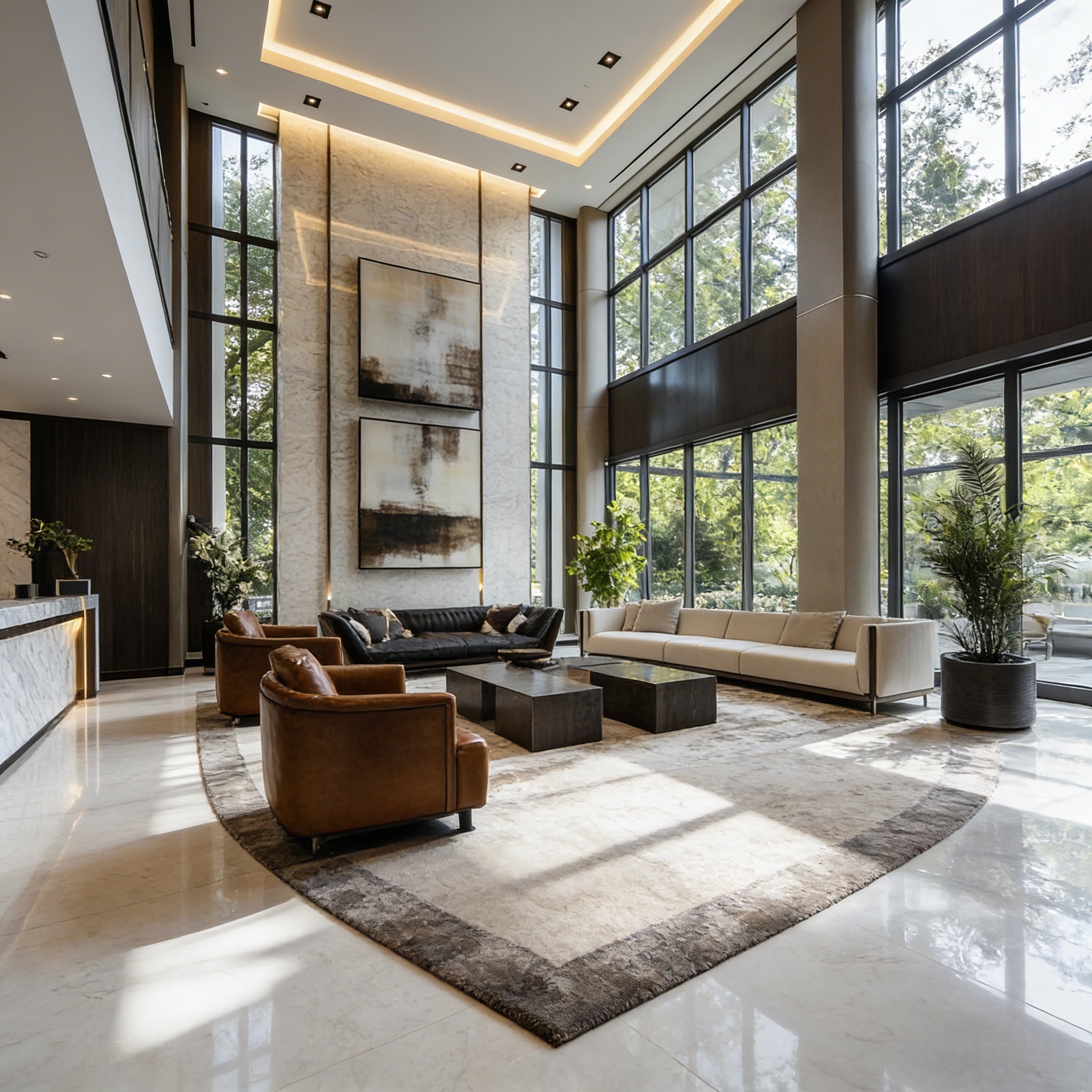
| Lobby and reception | A welcoming arrival and visible service point | Layered lighting, focused accents and comfortable views from both sides of the counter |
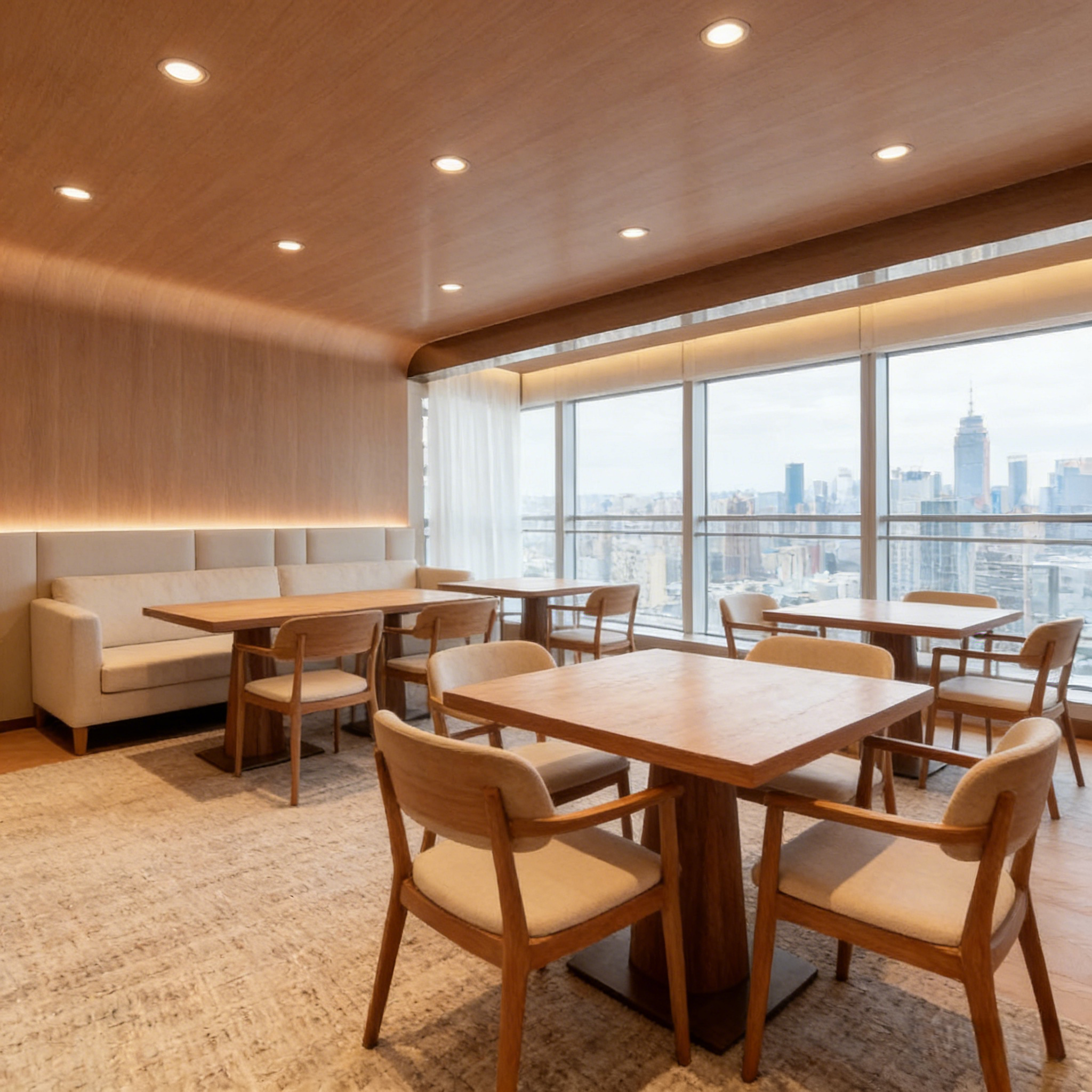
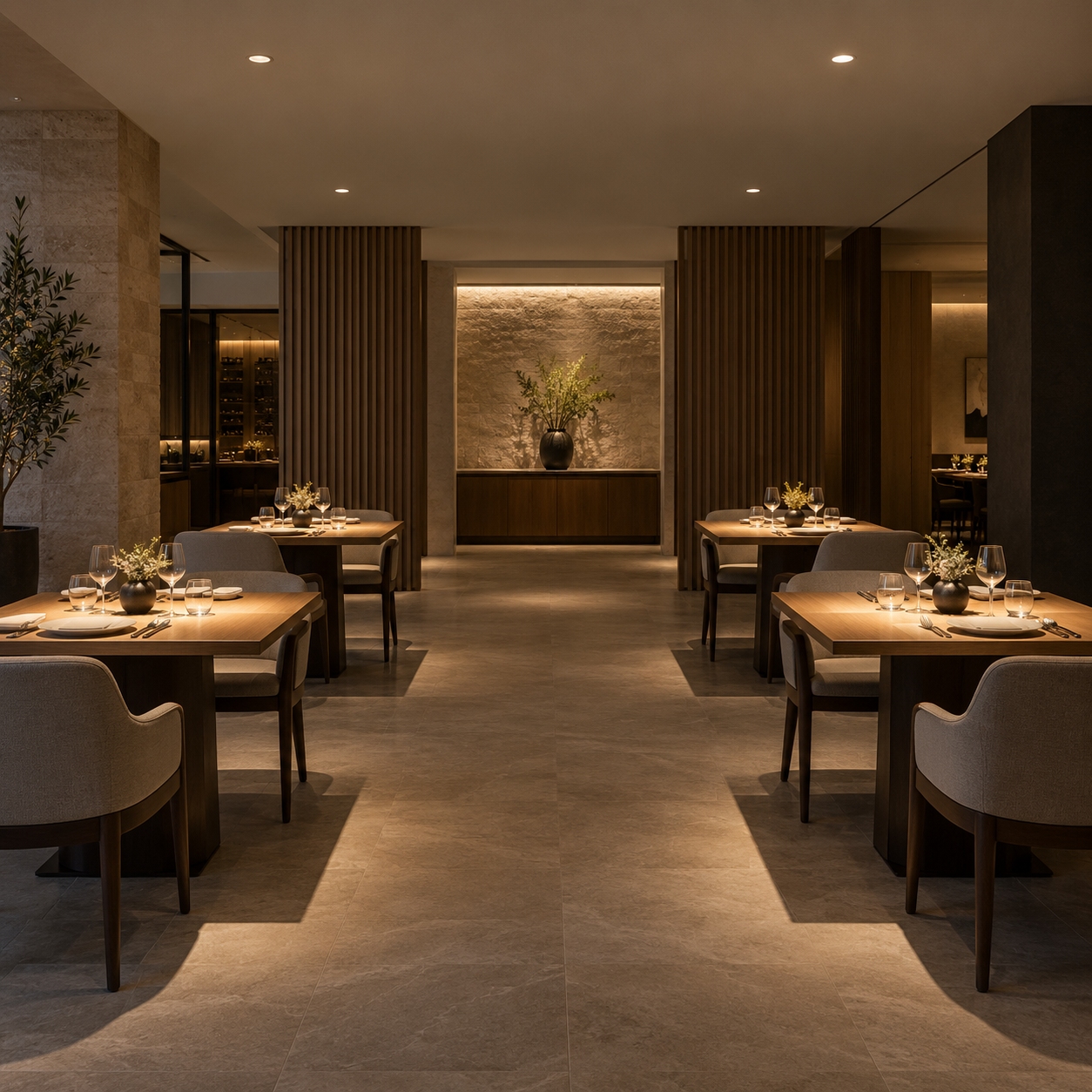
| Restaurants and lounges | Light on tables with a relaxed atmosphere | Accurate aiming, distinct zones and flexible light levels |
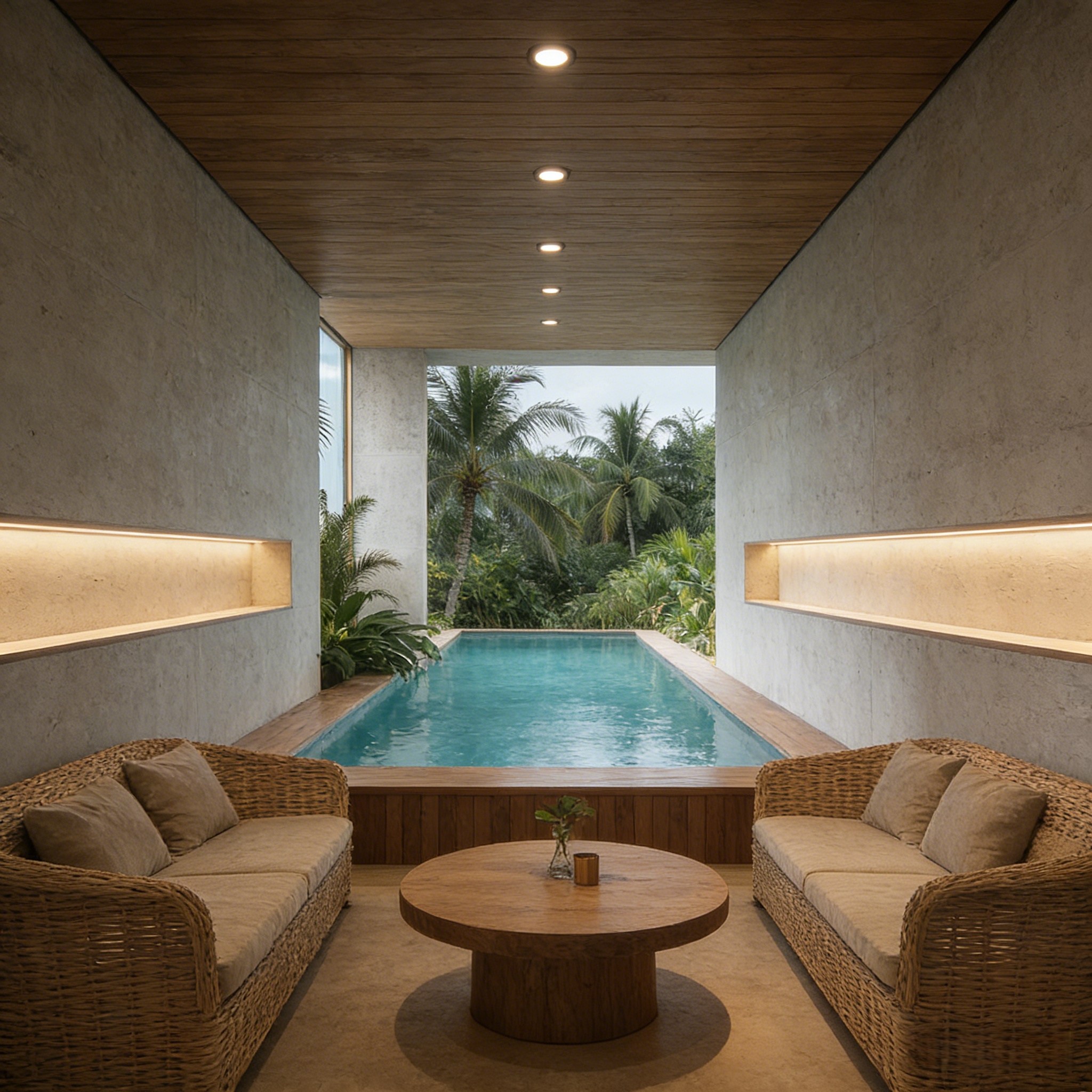
| Bathrooms | Clear visibility for movement and grooming | Appropriate protection for the installation location and effective mirror lighting |
Use this table as a planning checklist, not as a fixed specification. The ceiling height, finishes, furniture layout and operating hours can change the answer.
A hotel guest may look toward a downlight while lying in bed, sitting on a sofa or walking along a corridor. Review the fixture from these positions, especially where a bright aperture could enter the normal field of view or appear in a mirror or television.
A deeply recessed light source, suitable reflector or optical accessory may help shield the bright source. Glare still depends on the complete installation, including light output, beam direction, fixture position and surrounding brightness. A product’s stated glare value should be assessed in the context of the planned room, rather than treated as a guarantee of comfort everywhere. The downlight glare-control guide explores this in more detail.
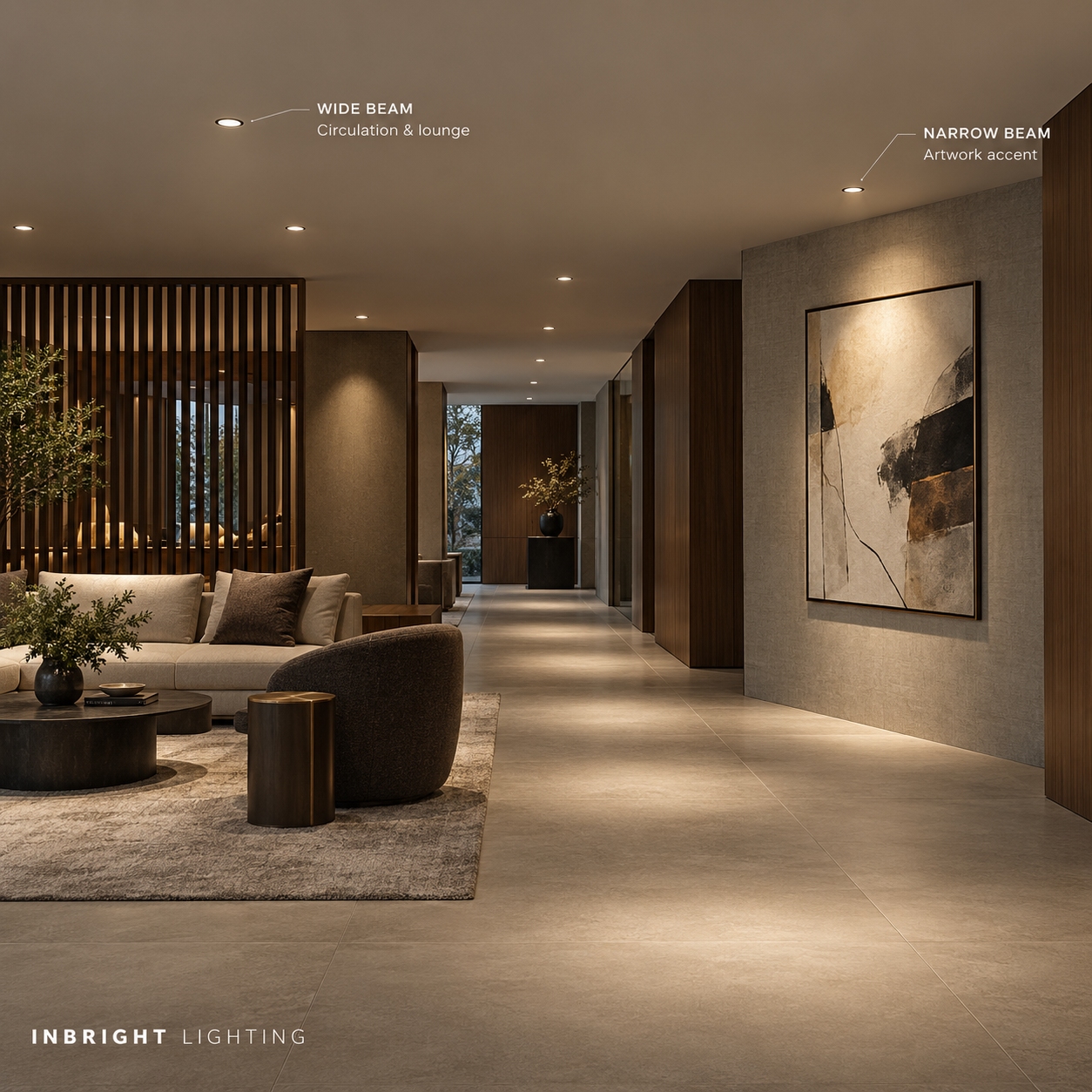
A narrow beam can highlight artwork, a reception feature or a restaurant table. A wider beam can help provide general light across circulation and seating areas. Medium beams may be useful where a project needs some emphasis with broader coverage.
Beam angle must be considered with mounting height and target size. The same beam covers a larger area when the distance to the illuminated surface increases. For precise selection, review the intensity distribution and photometric file for the exact model. Our LED downlight beam angle guide compares 15°, 24°, 36° and 60° options.
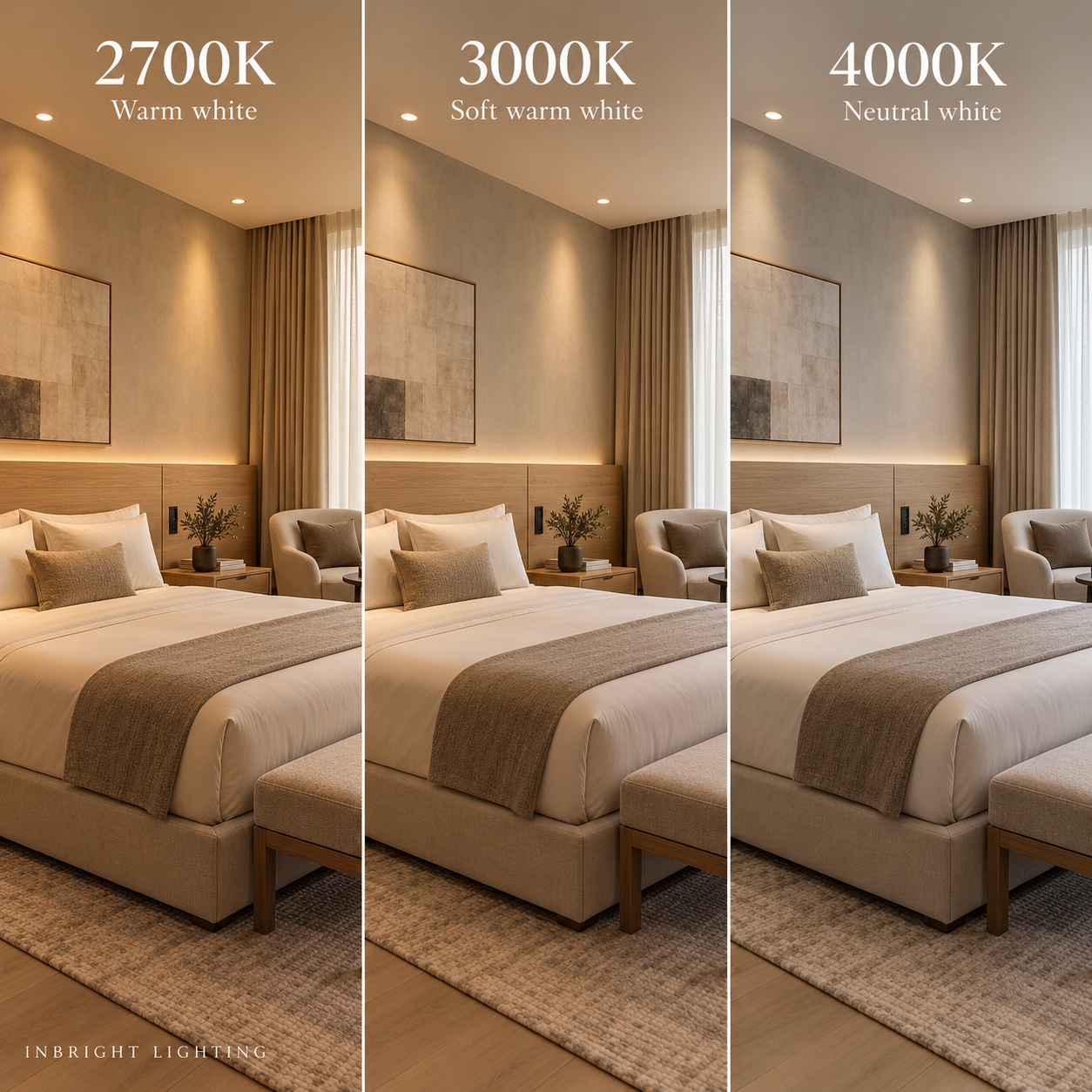
Warm light is often chosen for guest rooms, restaurants and lounges to support a relaxed atmosphere. Neutral light may be appropriate in selected work or service areas. The right colour temperature depends on the interior finishes and the intended experience; keep adjacent areas visually coordinated when guests can see them together.
Check colour rendering where the appearance of food, artwork, fabrics or people matters. Compare the stated performance of the exact products being specified, and review a sample against the actual materials when possible. If the project uses dim-to-warm or tunable light, assess its appearance at the settings guests will use, not just at full output.
A hotel room may need different settings for arrival, reading and rest. Public spaces may change their light levels from day to evening. Specify which fixtures belong to each control zone and what each scene should do.
Confirm that the downlight, LED driver, control protocol and dimmer work together. Test the full intended dimming range for smooth operation, visible flicker, noise and consistent behaviour across multiple fixtures. LED compatibility with the selected dimming system is an important purchasing check.
Controls should also be straightforward for guests. Clearly identified scenes can be easier to use than a collection of switches whose functions are unclear.
A suitable lighting effect is only useful if the fixture fits the building. Before approval, confirm:
Protection requirements and electrical rules depend on the project location and the fixture’s exact position. Confirm them against the applicable local requirements and the selected product’s installation instructions.
For a hotel project, ask for the datasheet and photometric file for each exact configuration quoted. A change in reflector, lens, beam angle, output or accessory may change the lighting result.
Use the files to assess target light levels, uniformity and glare in a lighting calculation. Then review a sample installation in representative areas, particularly a guest room and a corridor. Check the result with the interior finishes, furniture and control scenes in place.
Choose hotel downlights area by area. Begin with what guests and staff need to see, then coordinate the beam angle, light output, glare control, colour appearance and dimming system. Verify that the chosen fixtures fit the ceiling and can be maintained throughout the property’s life.
A successful hospitality scheme uses downlights deliberately: broad light where people need to move comfortably, focused light where attention is useful, and careful control of brightness wherever guests are likely to see the light source.
Building 2, No.442, Wuyi Road, Jianghai District, Jiangmen City, Guangdong, China.
admin@inbright-lighting.com
0086 - 13424998756
Copyright © Jiangmen Inbright Lighting Co., Ltd All Rights Reserved. 粤ICP备2025393167号 Sitemap XML